

In the corporate world, the perceived success of an event is often measured by a single vanity metric: headcount. We see packed rooms, flashing lights, and thousands of attendees, and we assume the event was a success. However, in the realm of strategic events, size is secondary to strategic impact.
The truth is, size only matters when it is intentionally chosen to maximise your Return on Investment (ROI). A large event requires intricate logistics and a substantial budget; a small, intimate event demands meticulous personalisation. Neither is inherently better; they are simply different tools for different business goals.
At MB Squared, we focus on engineering the right scale to deliver maximum value, proving that the future belongs to smarter, not necessarily bigger, investments. This article breaks down the strategic differences and the specialised expertise required to master events of any scale.
Chapter 1: The Advantage of Intimacy – Mastering the Micro Event

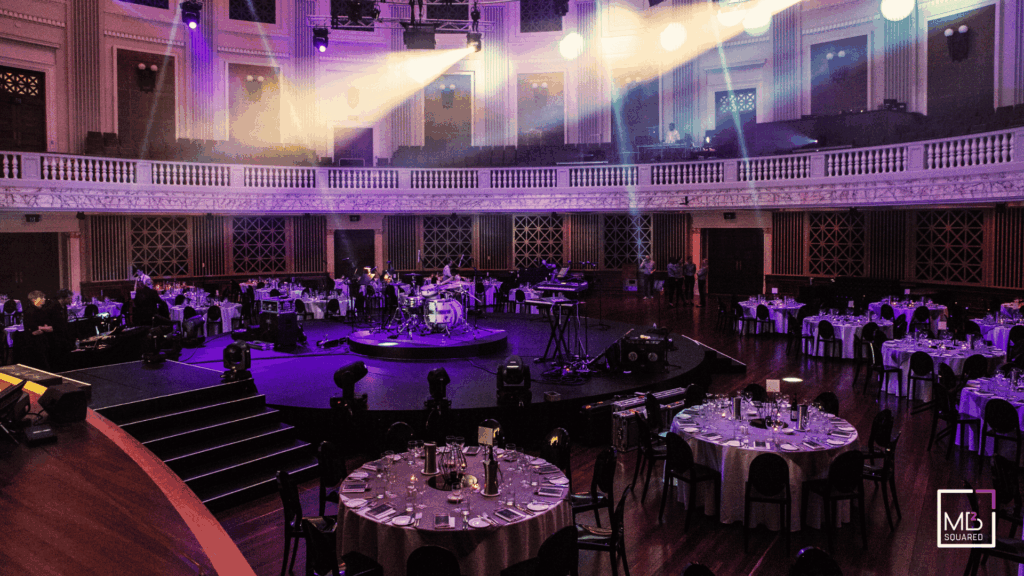
A growing trend in the Australian corporate landscape is the rise of micro and small-scale events (often 250 people or fewer). These events are proving that bigger isn’t always better when the goal is deep engagement and accelerated pipeline.
1. Deeper Connection and ROR
Smaller events create an experience that large conferences rarely deliver, allowing for deeper access to subject-matter experts and authentic conversations. This intimacy fosters a close-knit atmosphere where every attendee feels recognised.
- Accelerated Deal Cycles: The focus moves from broad exposure to meaningful conversations where business decisions happen faster.
- Targeted Personalisation: Personalisation is easier and more impactful when serving dozens instead of thousands. Your Creative Event Design can tailor content to niche interests and follow the energy of the room.
2. Cost-Effectiveness and Flexibility
Micro events offer significant strategic advantages for Event Management and budget control:
- Lower Risk, Higher Flexibility: Without the overheads of massive productions, micro events are inherently more cost-effective and accessible. They are easier to postpone or alter, resembling nimble speedboats compared to a large conference’s ‘hard to turn’ cruise ship bulk.
- Focused Spending: Resources can be channeled into elevated details—high-quality catering, bespoke content, or unique entertainment—luxuries often unfeasible at scale.
“The shift reflects a larger truth: in-person connection doesn’t have to be big to be valuable — it just has to be meaningful. These aren’t ‘less than’ versions of the old tentpoles; they’re smarter investments.”
Chapter 2: The Demands of Scale – Mastering Full-Scale Production
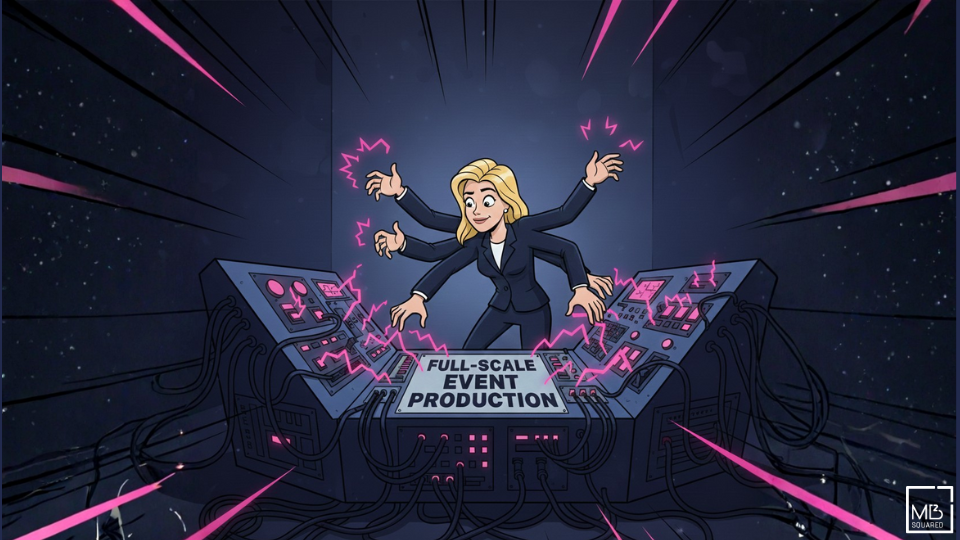
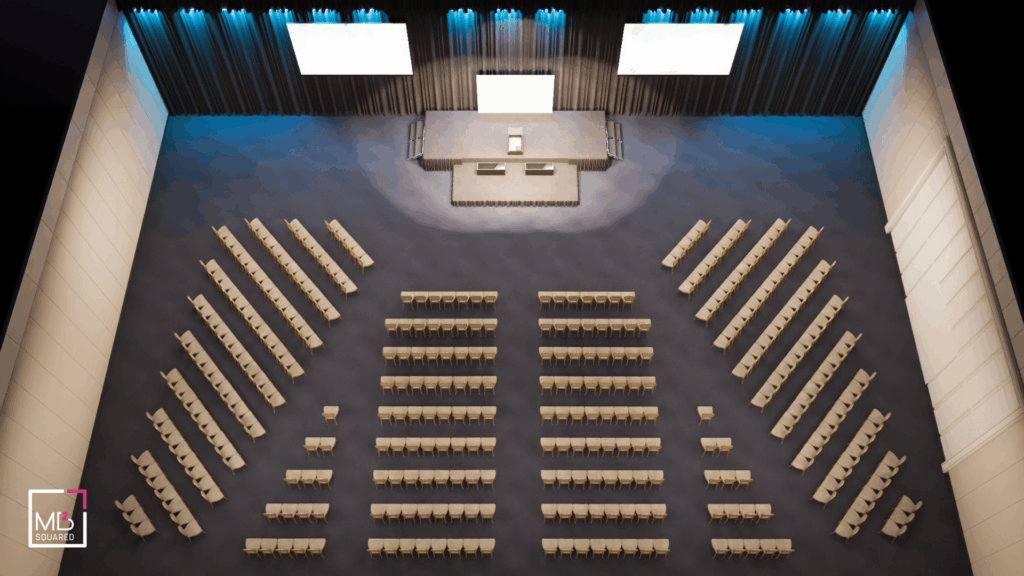
While intimacy is powerful, some goals—like broad brand visibility, large-scale training, or media buzz—can only be achieved with a large-scale event. These high-stakes affairs, however, demand a specialised level of Event Production Management and meticulous logistics.
3. The Volume Mandate: Maximising Gross Revenue
For paid ticketed events, the primary objective is often clear: maximising gross income and capturing a high volume of leads. This type of event ROI is fundamentally different from ROR. While the cost per attendee may be lower at a micro event, the total revenue potential of a massive, well-executed ticketed conference is vastly higher. The strategic impact of a large event is measured not just by its size, but by its capacity to achieve critical mass for sales and lead generation, validating the increased production cost.
4. Complexity of Production and Execution
As events scale in size, the role shifts from standard Event Management to Event Production Management—a role with a significantly wider scope that integrates logistical strategy with technical oversight.
- Specialised Technical Delivery: Large audiences require professional-grade sound, intricate lighting, and broadcast systems. This is a highly specialized trade; the Production Manager does not necessarily operate this gear, but they must secure and manage the expert AV teams required to deliver it.
- Infrastructure Feasibility: A key part of this wider scope is risk management. The production team must ensure that technical leads have meticulously assessed the venue’s infrastructure—power phases, rigging points, and data capabilities—to guarantee the vision is physically achievable.
- Holistic Execution: While standard event management focuses on the guest experience, Production Management controls the entire operational ecosystem. This means coordinating the master timeline, managing technical vendors, and overseeing site safety, ensuring that the complex AV and the event logistics work as one.
5. Maximising Creative Impact at Scale
For large-scale events, the Creative Event Design focus shifts to making every attendee feel included and valued, even within a vast crowd. This is achieved through awe-inspiring experiences:
- Immersive Technology: Leveraging advanced technology, immersive experiences, and high-profile entertainment to captivate a broad audience.
- Strategic Flow: Meticulous Event Management of crowd dynamics is critical—the sheer volume of people requires proactive planning to prevent bottlenecks and ensure smooth transitions, protecting the attendee experience from chaos.
“Full-scale event production covers every aspect of an event, from initial planning to the final wrap-up. It’s the behind-the-scenes magic that brings together logistics, creative design, technical support, and entertainment.”
Chapter 3: The Strategic Equation – Measuring Impact, Not Headcount

The final truth is that a successful event is not defined by its number of attendees, but by its verifiable ROI.
6. Moving Beyond Vanity Metrics
MB Squared’s Problem Solver’s Playbook dictates that you must define clear, measurable goals before planning begins. You must move beyond vanity metrics like headcount and focus on:
- Revenue Metrics: Ticket sales, sponsorships, and pipeline value.
- Qualitative Metrics: Net Promoter Score (NPS), attendee satisfaction, and the quality/quantity of connections made.
- Demand Generation: The number of leads acquired and the pipeline generated to fuel future business.
7. The Technology of Strategic Measurement
To prove that size was correct for the goal, the event must be measurable. This requires the proper Event Management technology stack:
- CRM Integration: The real magic happens when event data flows directly into your CRM, tracking who attended, what sessions they engaged with, and the direct impact on revenue and lead generation.
- Actionable Data: Using real-time data analysis to inform future event strategies and allocate budgets toward high-ROI activities. This provides the credibility and transparency leaders need to keep investing.
“A good event ROI is when your event generates more value—tangible or intangible—than the cost invested. This includes objectives, event type, size, planning and execution.”
The Problem Solver's Mandate: Execution Discipline

Choosing the correct scale—whether macro logistical intricacy or micro personalisation—only guarantees one thing: complexity. Every strategic size decision presents unique execution risks that must be mastered.
-
Macro Risk: A massive event demands flawless coordination and extensive security, where a small oversight risks a catastrophic breakdown.
-
Micro Risk: A highly intimate gathering places extreme pressure on every single touchpoint, making any technical glitch immediately detrimental to the high-value relationship.
This is why The Problem Solver’s Playbook is non-negotiable. It dictates that flawless execution isn’t about avoiding problems—it’s about mastering them through foresight, crisis management, and the crucial human ability to ‘think on your feet’ when systems fail.
Want to secure a partner who treats every event size as a strategic risk-management challenge? Click the button below!
Conclusion: Engineering the Right Scale
Does event size matter? Yes, but only when you strategically match the scale to your desired impact. A large event demands meticulous Event Production Management to execute a commanding vision, while a small event requires sophisticated Creative Event Design to deliver high-touch intimacy and deep ROR.
Stop focusing on the headcount. Start engineering the right scale to deliver on your strategic objectives.

FAQs
Does event size directly correlate with event ROI? No. ROI is determined by the net value generated compared to the cost, which is entirely dependent on meeting the event’s goals. A small, intimate event can generate a higher ROI through deep relationships and low overhead than a large event with high costs.
What is the main advantage of choosing a micro event? Micro events (typically under 250 attendees) offer a wealth of benefits including deeper access and connection to subject matter experts, cost-effectiveness, and a much higher potential for tailored personalisation and flexibility.
What unique challenge does a large-scale event present? Large-scale events present unique challenges in Event Production Management, requiring specialized AV, intricate staging, and meticulous logistics to ensure technical precision and manage complex delegate flow and safety (crowd dynamics).
How does the scale of an event affect Event Production? The scale directly dictates production complexity. Large events demand professional-grade sound, specialized lighting, and significant venue infrastructure assessment (power, rigging) that is often beyond the scope of smaller gatherings.
What metrics should be used to prove the value of a small, intimate event? To prove value, focus on qualitative metrics and bottom-of-the-funnel conversion: Net Promoter Score (NPS), pipeline influence, customer retention rate, and the quality of Return on Relationships (ROR).
How can I ensure my event is the right size for my goal? Define clear, measurable objectives before selecting the size. If the goal is pipeline conversion or deep thought leadership, a smaller event is often more effective. If the goal is broad brand awareness or lead generation at scale, a larger event is the necessary tool.