

Let’s talk about the elephant in the ballroom: loneliness.
We are a species wired to connect, yet we’ve never been more isolated. In the corporate event world, we rely on AI to achieve “hyper-personalisation” — suggesting who to meet, what sessions to attend, and tailoring content until it feels bespoke. It sounds like success, right? But what if this very technology, designed to connect us, is actually eroding our capacity for genuine human connection?
This is the AI Paradox. While AI solves logistical problems, an over-reliance on simulated intimacy and curated content threatens the spontaneous, messy, and real human interactions that are the entire reason events exist in the first place. This isn’t just about bad vibes; it’s a tangible, existential threat to the value of your event.
The Loneliness Trap: When AI Replaces Real Connection
The power of AI for events lies in its ability to predict and automate. But human connection requires vulnerability, spontaneity, and presence—qualities AI cannot replicate.
1. Simulated Intimacy vs. The Spontaneous Handshake
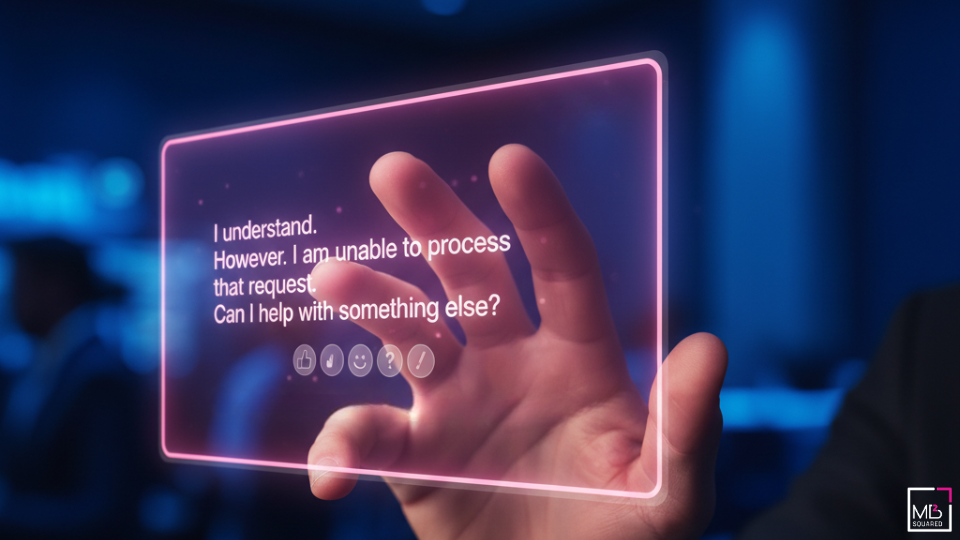
AI excels at matchmaking, pairing people based on algorithms, job titles, and past behaviour. While useful, relying solely on this removes the element of spontaneous chance encounters—the moment you meet a competitor who becomes a collaborator over a shared coffee break.
- The Paradox: As AI systems become more engaging and conversational, users spend more total time online, often displacing real-world interactions and even diminishing our capacity for the messy work of real connection.
- The Risk: When every interaction is filtered and curated by an algorithm, it strips the exchange of emotional risk and ultimately makes relationships shallower and less reciprocal.
2. The Erosion of Shared Purpose and Social Solidarity
AI saves companies hundreds of billions by automating work. While this is touted as a benefit, it has a less obvious implication: the automation of purposeful work can lead to a lost sense of mission and social solidarity.
An event is one of the few places left where people gather for a shared, collective experience. Event Design must resist the urge to hyper-segment the audience to the point where they are only consuming content tailored just for them. The shared experience—the collective laugh, the spontaneous applause, the palpable buzz in the room—is the antidote to the AI-induced loneliness paradox.
“Face to face connection helps boost mood, manage emotions and improve general wellbeing. It helps us to feel loved, cared for and valued and forms the basis for our interpersonal relationships and emotional wellbeing.”
Fighting Back: Designing for Belonging and Trust
To make your event a powerful counter-force against digital isolation, you must consciously design for belonging, trust, and real-world infrastructure.
3. Reclaiming Offline Life as the Default
The solution is not to eliminate AI, but to use it to augment human relationships, not replace them. This requires a strategic commitment from Event Managers to use AI to prompt people to connect with humans—and then get out of the way.
- Physical Infrastructure: Use AI to streamline check-in and logistics, freeing up onsite staff and budget to invest in relational infrastructure: comfortable, accessible, and inviting spaces that nurture genuine human connection.
- Designing for Vulnerability: Incorporate wellness and mindfulness activities like “networking walks” or tech-free relaxation spaces, which are proven to help attendees take a breath, recharge, and reconnect. This fosters the trust needed for deeper, more meaningful interactions.
“When considering a pool of ideas created by AI, the ideas fall short in originality and are too similar to each other. If you rely on ChatGPT as your only creative advisor, you’ll soon run out of ideas.”
— Christian Terwiesch, Co-Director of Wharton’s Mack Institute
4. Human-Led Creativity vs. AI’s Pattern Recognition
Event design must remain a human domain because only humans can deliver originality and non-linear thinking. AI excels at pattern recognition; it is fundamentally unable to break rules or think outside the box to deliver the “first ever, new and improved” experience that is the hallmark of MB Squared’s Creative Event Design.
We need human creativity to craft the emotional narrative and the unexpected “moments of drama, reflection, and an unexpected turning point” that give the event its lasting impact.

5. Ethical and Adaptable Leadership
When AI systems track attendee behaviour, you need human oversight to grapple with the ethical considerations and ensure transparency. The responsibility for data privacy and the capacity to adapt to real-time crises (like an AV failure or a cancelled speaker) cannot be outsourced to a system. Human expertise is the final filter, providing the critical thinking and ethical judgement required to safeguard the attendee experience.
“We must resist the narrative that AI companions are inevitable or neutral… Instead of normalizing emotionally immersive AI, we must build platforms that educate users on healthy social connection and actively encourage real-world relationships—prompting people to get out of AI, not deeper into it.”
Conclusion: The Future is Human-Centred
The debate is not AI versus humans; it’s human-centred design powered by AI. We must acknowledge the potential for AI to increase isolation and actively fight the AI Paradox with a conscious, strategic decision to invest in relational infrastructure and authentic connection at every event touchpoint. MB Squared leverages the speed and efficiency of AI to handle the mundane, freeing our Event Management teams to focus on the strategic, creative, and empathetic human connections that will make your event truly unforgettable, ensuring your audience leaves feeling not just informed, but genuinely connected.
FAQs
How is AI currently used in event management? AI is used in event management to automate tasks, personalise attendee experiences, and analyse data for insights on attendee behaviour, preferences, and logistics. This includes tools for registration, content recommendations, and automated communication with attendees.
Why isn’t AI enough for successful event management? While AI can streamline and personalise certain processes, it lacks the human empathy, creativity, and ethical oversight necessary for creating truly memorable and meaningful events. AI cannot fully grasp the nuances of human interaction, cultural sensitivities, or the underlying motivations of attendees.
Can AI help in designing the layout and ambiance of an event? AI can suggest efficient layouts and décor based on data trends, but it doesn’t understand the atmosphere needed for connection or comfort. Human event professionals use experience and empathy to craft spaces that are both inviting and functional (like using Biophilic Design), enhancing the attendee experience.
How does human expertise improve attendee engagement? Human experts go beyond data to understand attendees’ motivations and tailor events that meet their unique goals, whether for networking, learning, or relaxation. This insight results in deeper engagement and satisfaction among attendees by focusing on authentic, spontaneous connection over simulated intimacy.
What are some ethical considerations when using AI in events? AI collects and analyses personal data to personalise attendee experiences, but this requires ethical oversight to protect attendee privacy and data security. Human event professionals ensure transparent data use and prevent misuse, maintaining trust between attendees and organisers.
Can AI handle unexpected challenges during events? AI can alert event organisers to potential issues, but it lacks the adaptability and judgement required for real-time problem-solving. Human experts bring flexibility, quick decision-making, and a sense of control, managing unforeseen circumstances smoothly.
How does MB Squared balance AI and human expertise in event management? MB Squared leverages AI as a supportive tool, enhancing efficiency and personalisation, but always prioritises human creativity, empathy, and ethical responsibility. This approach ensures every event is carefully crafted, attendee-focused, and aligned with client values, actively fighting the AI loneliness paradox.